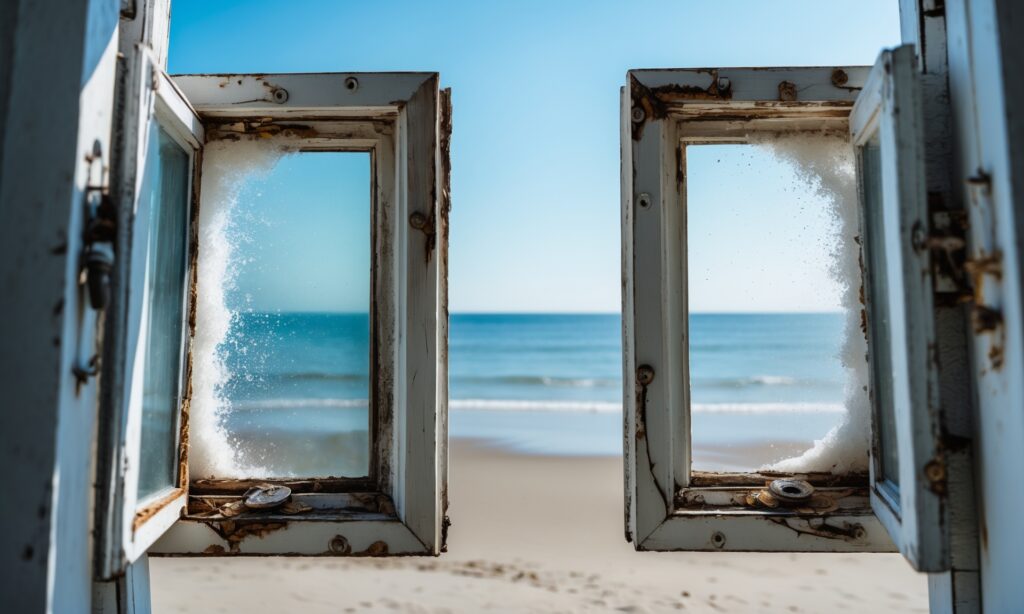
Fort Lauderdale’s ocean breeze feels refreshing, but it also attacks your windows every day. Salt corrodes frames, dries out seals, and seizes hardware long before most owners notice a problem. In this guide, you will learn how salt air damages each part of your window system, which services stop the damage, and how Glass Act Cleaning protects coastal properties across Fort Lauderdale and Davie.
How Salt Air Damages Windows in Fort Lauderdale
Ocean breezes carry microscopic salt particles inland. These particles settle on glass, frames, and hardware, and they form a thin film that you often cannot see. Because that film holds moisture, it corrodes metal and breaks down protective coatings day after day.
Frames take the first hit. Salt rusts metal frames, while wood frames absorb moisture, swell, and rot. Vinyl and composite frames last longer, yet salt still weakens their coatings and makes them crack. As a result, windows lose both their strength and their appearance.
For business owners, developers, and property managers, the stakes rise even higher. Neglected windows signal poor upkeep to tenants and clients. Clean, well-kept windows, on the other hand, show professionalism and protect your property’s value.
Why Humidity Makes Salt Worse in South Florida
Sodium chloride, the main ingredient in sea salt, attracts water from the air. When salt settles on a frame or hinge, it creates a damp surface that speeds up corrosion. South Florida’s humid climate keeps that cycle running almost all year, so local properties wear down faster than inland ones.
Hardware suffers the most. Salt works its way into hinges, locks, rollers, and handles, and it makes them stiff, sticky, or completely stuck. Consequently, owners replace parts that regular cleaning and lubrication could have saved.
How Salt Air Affects Seals and Weather-stripping
Seals keep water and drafts out of your home or building. Salt exposure, combined with sun and heat, dries these materials out and makes them crack and shrink. Once a seal fails, water slips inside, fogs the panes, feeds mold, and stains walls and floors.
Furthermore, failed seals raise your energy bills because cool air escapes. Therefore, you should inspect seals often and schedule caulking repair at the first sign of cracking or gaps.
Salt Air Damage at a Glance
| Window Component | Salt Air Effect | Preventative Action |
| Metal Frames | Rust, pitting, discoloration | Regular cleaning, anti-corrosion treatments |
| Wood Frames | Swelling, rot, cracking | Sealant application, prompt cleaning |
| Seals | Drying, cracking, leaks | Inspection, caulking repair as needed |
| Hardware | Corrosion, stiffness, failure | Lubrication, professional inspection |
| Glass | Etching, cloudiness, stains | Frequent exterior glass cleaning |
Services That Stop Salt Air Damage
Several services work together to protect your windows. Each one targets a different part of the problem.
- Exterior Glass Cleaning: This service removes salt film from the glass before it etches the surface.
- Pressure Cleaning: Technicians use controlled, low-pressure methods to wash salt from frames, tracks, walls, and walkways without harming seals.
- Glass Stain Removal: Specialists lift hard-water and salt stains that ordinary cleaning leaves behind.
- Full Restoration and Scratch Removal: This service restores glass that salt and grit have already damaged.
- Caulking Repair Services: Technicians reseal gaps and cracks before water gets inside.
- Hurricane and Accordion Shutter Services: These services clean and maintain shutter tracks that salt corrodes and jams.
Note that high-pressure spray can damage seals and force water behind frames. Always choose a company that adjusts pressure to match the surface.
What a Professional Window Cleaning Company Does Differently
Glass Act Cleaning approaches every window in Fort Lauderdale with proven techniques and commercial-grade tools. First, our technicians inspect each pane for salt buildup, hard water stains, and damaged seals. Next, they apply professional cleaning solutions that dissolve grime without scratching the glass. Then, they use squeegees and microfiber cloths to leave streak-free surfaces.
Furthermore, our crew cleans frames, tracks, and sills, so your windows look spotless from every angle. Because coastal air leaves stubborn residue, we also schedule regular visits to protect your glass. Therefore, Glass Act Cleaning delivers clearer views and lasting results every time.
How to Choose a Window Cleaning Company Near the Coast
Not every company understands salt exposure. Therefore, ask each provider the following questions:
- Do you have experience with coastal properties in Fort Lauderdale?
- How do you remove salt without damaging seals and frames?
- Do you offer both window cleaning and pressure cleaning?
- Can you provide local references or reviews?
Reputable companies answer these questions clearly, and they back their work with maintenance plans. You can also read reviews on our Google Business Profile to see how Glass Act Cleaning serves Fort Lauderdale customers.
Long-Term Benefits of Protecting Your Windows from Salt Air
Proactive care pays off in several ways. First, your windows last longer, so you avoid early replacement costs. Second, tight seals improve energy efficiency and lower cooling bills. Third, clean windows lift curb appeal, which attracts tenants and raises occupancy. Finally, early inspections save you time, money, and stress.
Key Points To Remember About Salt Air Window Damage
- Salt air leaves a corrosive film on glass, frames, seals, and hardware.
- Humidity speeds up salt damage because salt pulls moisture from the air.
- Metal frames rust, wood frames rot, and vinyl coatings turn brittle.
- Seal failure lets moisture in, which causes foggy panes and mold.
- Regular exterior glass cleaning removes salt before it etches the glass.
- Gentle pressure cleaning clears salt from frames, tracks, and surrounding surfaces.
- Early caulking repair stops small leaks from becoming interior damage.
- Professional inspections catch problems that routine cleaning misses.
FAQs: About Salt Air Window Damage
How often should I clean my windows in Fort Lauderdale to fight salt air?
Most Fort Lauderdale properties need exterior window cleaning every one to three months. Beachfront buildings, waterfront condos, and homes along the Intracoastal need the shortest schedule because they collect salt fastest. Properties a few miles inland can stretch the interval slightly. A professional can inspect your property once and set the right schedule.
Does salt air damage windows in Davie and inland Broward neighborhoods too?
Yes. Sea breezes push salt miles inland, so Davie, Plantation, and Sunrise windows collect it as well, only more slowly. Humidity, rain cycles, and wind direction all change how fast salt builds up. Even so, inland owners should still clean regularly and check seals and hardware each year.
Can pressure cleaning remove salt from window frames and hardware?
Yes, when a trained technician controls the pressure. Gentle pressure cleaning rinses salt from frames, tracks, walls, and walkways. However, high pressure can crack seals and push water into the wall. For that reason, hire a company that adjusts its method to each surface.
What are the first signs that salt air is damaging my windows?
Look for white or chalky residue, rust spots, bubbling paint, and pitted metal. Next, check for stiff hinges, sticky locks, and sliding tracks that grind. Foggy glass between double panes and drafts near the edges also signal a failing seal. If you spot any of these, call a professional right away.
Should I clean my hurricane shutters and tracks to prevent salt damage?
Yes. Salt corrodes shutter tracks, hinges, and fasteners, and corroded parts can jam when you need them most. Clean and lubricate them before each hurricane season, and check them again afterward. Professional shutter services keep them ready to deploy.
Who offers reliable window cleaning near me in Fort Lauderdale?
Glass Act Cleaning serves Fort Lauderdale, Davie, and nearby South Florida communities with window cleaning, pressure cleaning, and related exterior services. Our crew treats every property as coastal, so we focus on salt removal and early damage detection. Call us or check our Google Business Profile to read reviews and request a quote.
Key Takeaways About Salt Air Window Damage
Salt air is a fact of life near the coast, but it does not have to ruin your windows. Clean them on a steady schedule, inspect seals and hardware, and fix small problems fast. With regular window cleaning, gentle pressure cleaning, and timely caulking repair, you protect your investment and keep your property sharp. Contact Glass Act Cleaning today to schedule a salt-air inspection and keep your windows clear and strong for years.